

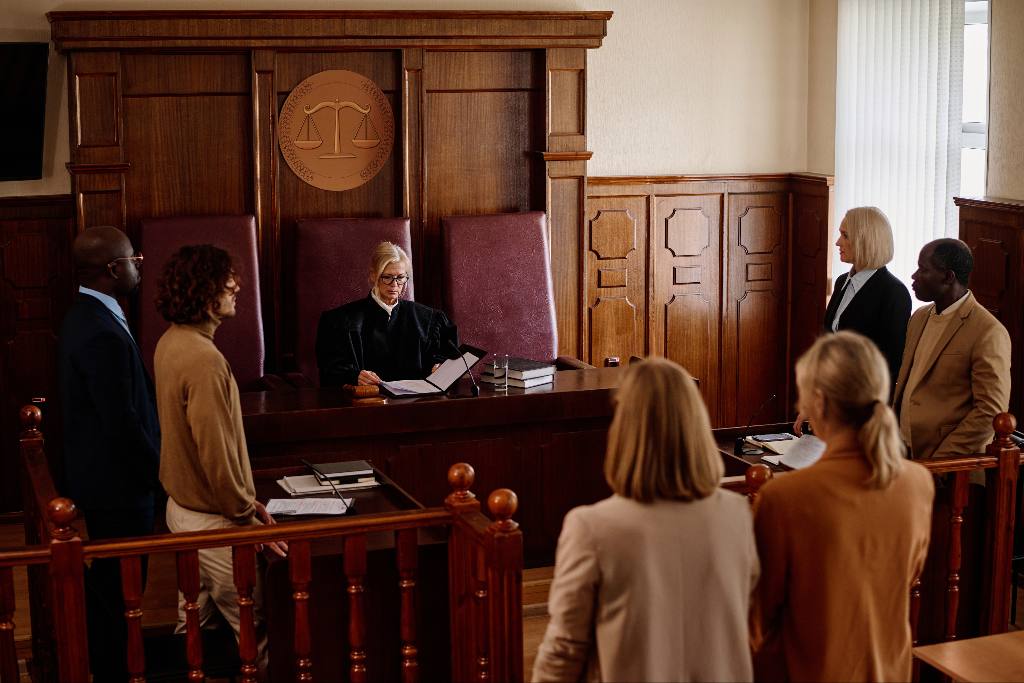
What Happens at a Preliminary Hearing?
Written on September 9, 2026. Posted In Blog
A preliminary hearing is one of the first court dates in a criminal case, and it can shape much of what follows. A judge is only deciding whether there is enough evidence for the case to move forward, not whether anyone is guilty.
If someone you love was just arrested, the words preliminary hearing can sound intimidating. The purpose, though, is fairly narrow, and knowing what the day involves takes some of the weight off the wait.
What A Preliminary Hearing Is In Georgia
A preliminary hearing is a court proceeding that decides whether there is probable cause to believe a person committed the crime they are charged with. In Georgia, it is also called a commitment hearing or a probable cause hearing. It usually takes place in magistrate court, in front of a magistrate judge.
The judge is not deciding guilt or innocence here. The only question is whether the state has enough evidence to send the case forward, which sets a lower bar than a trial would. A finding of probable cause does not mean a conviction is coming, only that the case can continue.
It helps to see how a preliminary hearing differs from an arraignment, since the two are easy to mix up.
| Stage | What it decides |
| Preliminary hearing | Whether there is probable cause for the case to move forward |
| Arraignment | Where the defendant hears the formal charges and enters a plea |
The arraignment is a separate step with its own timing and purpose.
Read: What Happens at an Arraignment Hearing?
When A Preliminary Hearing Takes Place
A preliminary hearing usually happens within about two weeks of an arrest. It comes up most in felony cases, where the right to challenge probable cause carries the most weight.
After an arrest, the person has a first appearance before a judge, generally within 48 to 72 hours. At that point, the judge explains the charges and, for a felony, the right to a commitment hearing. The hearing itself may happen the same day or get scheduled for a later date.
Timing can also shift depending on whether the person is in custody or out on bond. A grand jury indictment can also push a case forward on its own. If an indictment comes first, a separate preliminary hearing may no longer take place. A defendant can also choose to waive the preliminary hearing, which moves the case forward without one.
How A Preliminary Hearing Works
A preliminary hearing runs like a smaller, faster version of a trial, with one narrow question in front of the judge. Both sides take part, though the rules are more relaxed than they would be at trial.
Who Presents The Evidence
The state goes first. A prosecutor presents evidence meant to show probable cause, and the arresting officer often testifies about the investigation and the arrest. Georgia allows hearsay at this stage, which means an officer may repeat what other witnesses said.
What The Defense Can Do
The defense is not there just to watch. A defense attorney can cross-examine the state’s witnesses, question the evidence, and point out weak spots in the case. The defendant may testify too, though that opens the door to cross-examination, which is a choice to weigh carefully with a lawyer.
A preliminary hearing is not a bond hearing on its own. Even so, on some charges the defense can ask the magistrate to set or lower bond.
How The Judge Decides
After hearing both sides, the magistrate judge reaches one of a few outcomes.
- Probable cause is found, and the case is bound over to the proper trial court
- No probable cause is found, and the charges are dismissed at this level, though they can sometimes be refiled later
- The charges are adjusted, which can happen when the evidence points to a different offense
Because probable cause is a low bar, most cases are bound over to the next court. A dismissal is the less common outcome. Even then, it does not always end the matter, since the state can bring the case back through a grand jury.
Steps To Prepare For A Preliminary Hearing
Good preparation starts the moment the hearing lands on the calendar. A few clear moves can make the day go smoothly and protect the person’s options.
- Talk to a criminal defense attorney as early as possible, since an experienced lawyer often requests the hearing and runs the cross-examination
- Make sure you understand the exact charges and what the state has to prove
- Gather any documents, names, or details that could help the defense
- Confirm the date, time, and courtroom, then plan to arrive early
- If the person is still in custody, look into posting bond so they can prepare from home
The last point matters more than it first appears. Preparing from outside a jail cell gives the person and the attorney far more room to get ready, and our guide on how to bail someone out explains the release process in plain steps.
Missing A Preliminary Hearing In Georgia
Missing a scheduled court date is one of the costlier mistakes a person can make while a case is open. If the person was released on bond and does not show up, the judge can issue a bench warrant and the bond can be forfeited.
A bench warrant does not fade on its own, and it can lead to an arrest during any routine contact with law enforcement. Responding quickly, ideally with an attorney, is the best way to limit the damage.
Read: Do Bench Warrants Expire in Georgia?
Frequently Asked Questions About Preliminary Hearings In Georgia
What Happens After A Preliminary Hearing?
When probable cause is found, the case is bound over to the trial court. From there it moves toward the arraignment, then pretrial motions and, if needed, a trial.
Do You Enter A Plea At A Preliminary Hearing?
No. A plea is entered at the arraignment, not the preliminary hearing. The preliminary hearing only decides whether the evidence is enough for the case to move forward.
How Long Does A Preliminary Hearing Take?
Most are short, often finishing within an hour. The exact length depends on the charges, the number of witnesses, and how much the defense chooses to challenge.
Do You Have To Attend Your Preliminary Hearing?
If you are the defendant and the hearing is set, yes. Missing it can lead to a bench warrant and a forfeited bond. A defendant can, with counsel, choose to waive the hearing instead.
Get Bond Help Before A Preliminary Hearing With Free At Last Bail Bonds
Many people wait for a preliminary hearing from inside a jail cell, simply because they could not post bond after the arrest. Days behind bars make it harder to meet with a lawyer, gather documents, and walk into the hearing prepared. Securing release early changes that.
Posting bond lets the person prepare for the hearing from home, alongside their attorney, instead of from a cell. Free At Last Bail Bonds works across the metro Atlanta area, accepts payment plans and several forms of payment, and handles much of the process online, which keeps families from driving across the metro in the middle of the night. The team stays available 24 hours a day, because an arrest rarely happens on a convenient schedule.
Free At Last keeps offices in each community served, ready to help when timing matters.
- Fulton County
- DeKalb County
- Cobb County
- Clayton County
- Douglas County
- Carroll County
- Troup County
- East Point and College Park
If someone you care about is waiting on a preliminary hearing, call (404) 577-2245 any hour of the day or night to confirm bond options and start the release process today. Contact us and we will help you take the next step.
